HOW I THINK ABOUT CREATING VALUE IN REAL ESTATE TODAY
January 6, 2026 by Chip Fleming | Real Estate
Over the past 15+ years, I have developed a framework that has repeatedly driven outsized performance, contributing to more than $100M in value creation across diverse real estate markets, asset types, and hold periods.
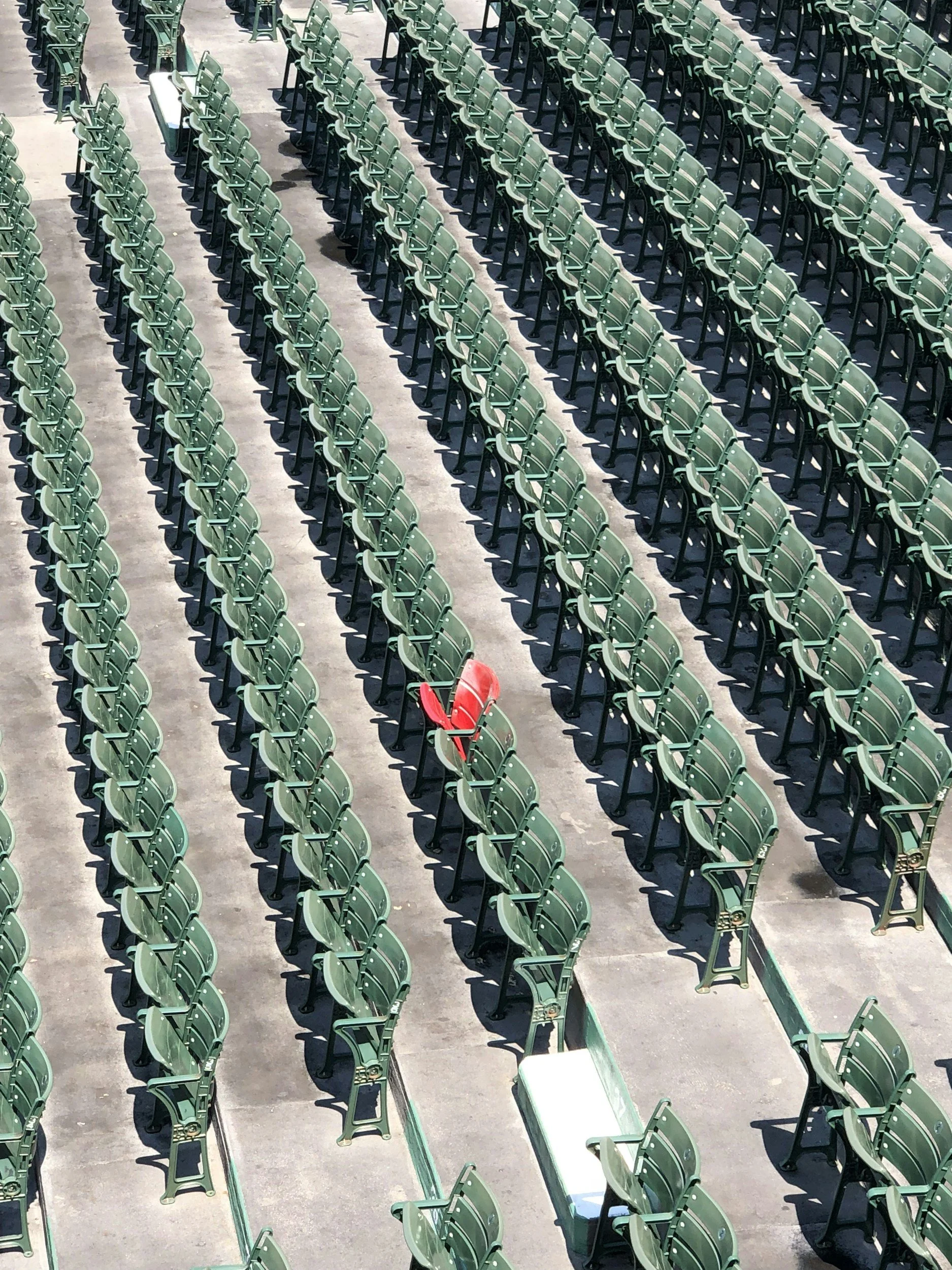
Most real estate underperforms for a simple reason. It is indistinguishable.
When choices feel interchangeable, people default to price. Once price becomes the decision lever, pricing power disappears.
You can see this clearly in multifamily, one of the strongest performing sectors in recent years. Walk through almost any new Class A project in a high demand market and the pattern is familiar. Beautiful buildings, similar amenities, nearly identical messaging, and aggressive concessions used to close deals. In some cases, up to two months of free rent.
If this has become normal at the top of the market, it is even more pronounced in older, more price sensitive assets.
Many teams accept this as the cost of doing business.
That is the commodity trap. And it is costly.
Commodity vs. Value-Based Real Estate
Commodity real estate competes on:
Features
Finishes
Incentives
Concessions
Price
Value-based real estate competes on:
Meaning
Identity
Relevance
Belonging
Trust
Community
Value-based real estate changes the basis of decision-making.
When a place is clearly differentiated and designed for someone specific, price becomes one factor among many rather than the lever required to close the deal.
The Consumer Truth Much of The Real Estate Industry Still Ignores
If price were the deciding factor, some of the world’s most valuable brands would not exist.
In a world where you can buy a well made, nearly identical handbag for a fraction of the cost, brands like Prada or Gucci continue to see extraordinary demand, even during periods of economic uncertainty. The materials are not radically different. The function is the same. What people are paying for is not utility.
They are paying for identity, signaling, and alignment.
And this dynamic is not limited to luxury categories. Far from it.
It shows up even in the most basic and commoditized products imaginable.
Take water.
In the United States, clean drinking water is widely available for free. Yet Liquid Death sells canned water for more than four dollars per can and reached a billion-dollar valuation in under five years. They did not invent better water. They created a brand, a story, and a point of view people wanted to align with.
At face value, this behavior seems irrational.
In reality, it is completely rational.
People are not optimizing for the cheapest option.
They are optimizing for alignment, relevance, and how something fits into their lives.
This is a truth consumer brands have understood for decades, and one that much of the real estate industry still struggles to fully internalize.
Why Many Teams Miss the Mark
Simply put, they do not understand their customers deeply enough.
Broad labels like “18–35,” “young professionals,” or “urban renters” tell you very little about behavior. They do not explain how people discover a place, what earns their trust, or why they choose one option over another.
Today, attention is fragmented and choice is contextual. People make decisions differently depending on where they are and how they are engaging with the world. Treating your audience as one broad and static group leads to generic design and messaging, ineffective marketing and a product that everyone price shops.
High-performing projects think in hyper-specific behavioral cohorts and evaluate:
How people spend their time
What content and experiences signal credibility
What they value enough to pay for
What frustrates them about existing options
What makes them stay, return, or leave
When customer understanding is the focus, decisions get much simpler and value always follows.
Why “Experience” Alone Is Not Enough
I often pause when people say, “You just need to create an experience.”
That advice is not wrong. It is simply incomplete.
You can absolutely have an experience that exists without differentiating anything. Many do. When experiences are generic or interchangeable, they stop creating value.
Today, what people respond to is not just the presence of an experience, but whether it feels unique, memorable and designed for them.
What a Meaningful Experience Looks Like
Take something simple like coffee.
Many buildings proudly list a coffee bar as one of their experiences. But if every competing building has the same setup, it does not differentiate anything. It is a convenience feature, not a value driver.
Now take it a step further.
If your residents or tenants genuinely care about coffee, you might:
Partner with a respected local coffee roaster
Host regular tastings or cupping sessions
Bring in roasters to talk about sourcing and craft
Offer limited-run blends available only to your building
Create small, repeatable rituals that turn a passive amenity into a shared moment
At that point, coffee is no longer just an amenity. It becomes a signal.
It says, “This place understands what I care about.”
That sense of being understood is where real value is created.
And this is not a one-time decision.
What differentiates today can become baseline quickly.
When that happens, performance depends on whether the idea is being actively refreshed or simply maintained. Assets that outperform treat differentiation as something that evolves, not something that gets installed once.
Expanding the Same Thinking Across Interests
The same principle applies everywhere:
Wellness-focused audiences
Not just a gym, but guided recovery nights, mobility workshops, breathwork sessions, or partnerships with trusted local practitioners.
Creative or entrepreneurial communities
Not just coworking space, but curated salons, founder dinners, skill-sharing nights, or access to people and ideas they wouldn’t otherwise encounter.
Food-driven tenants
Not just a communal kitchen, but chef residencies, tasting menus, cultural food nights, or cooking workshops tied to local identity.
Outdoor or adventure-oriented residents
Not just bike storage, but group outings, gear demos, local guide partnerships, or post-activity gatherings.
None of these require massive capital investment.
All of them require clarity, intention, and follow-through.
Why This Drives Real Value
People do not remember square footage or amenity lists.
They remember how a place fits into their life.
When a building reflects someone’s interests or priorities in a way that feels thoughtful and specific, price becomes less central to the decision. The asset stops competing on discounts and starts competing on relevance.
Concessions are often not inevitable.
They are a signal that the asset has not been clearly positioned as a value choice.
My Framework for Creating Places People Actually Love
1) Establish a Strong, Focused Core Identity
Before making meaningful decisions, answer:
Who is this place for?
What problem does it solve better than any alternative?
What story does someone experience within minutes of being here — and is it cohesive and compelling?
The story matters more than most teams realize. A strong story gives people context for why a place exists, what it values, and how it fits into their life. When the story is clear, people know immediately whether it is for them. That clarity accelerates choice and builds preference.
A clear identity and story become the filter for every decision that follows. They make it easier to say no to features, partnerships, and programs that dilute focus. Trying to serve everyone forces competition on price. Narrowing focus allows competition on relevance, and relevance commands premium pricing.
2) Know Your Customer Better Than Anyone — and Cater to Their Needs
Customer understanding is only valuable if it changes what you build and how you operate.
High-performing projects move beyond static personas and use behavioral insight to inform real decisions, including:
Which experiences and partnerships to prioritize
What signals trust and credibility in the market
How value is communicated across leasing, marketing, and operations
Where they hang out and what they respond best to
Where friction can be removed from the customer journey
Rather than designing for a single, generic customer, leading projects design around a number of very specific cohort types that they understand deeply. That alignment turns insight into relevance, and relevance into demand.
3) Design the Offer and Stack Value
Once identity and customer understanding are clear, the question shifts from what to add to how the offer is structured.
High-performing projects focus on the outcome the customer is actually seeking, then intentionally assemble elements that make that outcome easier, more enjoyable, or more complete. Value is created by removing friction, simplifying choices, and bundling aligned elements into a single, cohesive offer.
This is less about adding amenities and more about shaping how value is perceived and experienced. When the offer feels thoughtfully assembled rather than pieced together, it becomes harder to compare directly and easier to choose.
A clear example of this approach comes from Alex Hormozi, whose work has focused heavily on offer design as a primary driver of performance. He has written extensively about structuring offers around clear outcomes, reduced friction, and tightly aligned value.
I highly recommend his book $100M Offers (26k+ 5-star reviews…it’s pretty good…), which breaks this down in practical terms. His core idea is simple: make an offer so good people feel stupid saying no. The principle applies directly here. When the offer is structured well, the decision becomes easy.
4) Steward the Experience
As more of life moves online and becomes automated, the value of real, in-person connection increases.
People are not just looking for convenience. They are looking for places that feel human, welcoming, and easy to engage with. Environments where connection happens naturally, without being forced or staged.
Hospitality is the mechanism that makes this possible. It is the discipline of anticipating needs, removing friction, and creating moments of care that make people feel recognized rather than processed. When done well, hospitality turns space from functional into magnetic.
Strong stewardship ensures that identity and customer understanding show up consistently across design, operations, programming, and daily interactions. Not as performance, but as practice. In a world that is increasingly impersonal, places that invest in genuine hospitality and human connection stand apart and win.
5) Measure What Actually Drives Value — and Iterate
Much of the industry obsesses over historical reports and static metrics that explain what already happened, but offer little insight into what will happen next.
Occupancy, for example, is a lagging indicator. It tells you the outcome, not the cause.
High-performing projects focus on a small set of leading indicators that signal whether a place is truly being chosen and whether demand is strengthening or eroding. These indicators act as early warning signs and allow teams to make proactive adjustments instead of reacting too late.
The indicators I pay closest attention to include:
Pre-lease velocity
Lead-to-lease and tour-to-application conversion rates
Renewal rates and length of stay
Tenant lifetime value
Referral and word-of-mouth demand
Service and work order responsiveness
Move-out interviews that surface real reasons people leave
Just as important is reducing noise. Most teams track too much and act on too little. The goal is not more data, but better signal. A small number of metrics typically drive the majority of outcomes. Identifying and focusing on that critical 20 percent is what creates clarity and momentum.
The best projects do not get it right once. They measure, adjust, and refine continuously.
$100M+ in Value Creation: Lessons From the Field
Here are a few highlights from my career where meaningful value was created beyond market expectations by resisting sameness and being willing to do something bold and different.
1 - Liberty Station
The Anchor That Changed a District
Liberty Station’s Public Market began as a 20,000+ square-foot vacancy in the North End of Liberty Station, an area that was underperforming, under-visited, and missing a reason for people to be there.
At the time, introducing San Diego’s first modern food hall was not the obvious choice. It was early, unproven locally, and required a long-term belief in the place and the people it could serve.
Rather than filling space, the focus was on creating an anchor — something authentic, locally rooted, and meaningful enough to draw people in and keep them coming back.
That decision became foundational. It didn’t just activate a single building. It set the tone for the entire district and helped establish Liberty Station as a place people felt proud to spend time in, driving sustained demand and long-term value for years to follow.
Result:
Increased project rents from approximately $1.50/SF to over $5.00/SF (233%+)
Transformed Liberty Station into a regional destination
2 – Comunidad
From Startup Struggles to Industry Leader
When I joined Comunidad, it was a fast-growing company in the affordable housing space but growth was starting to mask deeper issues. The portfolio had fallen into the commodity trappings: heavily price-driven, transient resident base, and increasingly dependent on concessions. What initially looked like scale was quietly turning into stagnation and risk.
I was brought in to drive revenue growth, and the assumption was that pricing would be the primary lever. It wasn’t. In fact, pricing pressure was a symptom, not the problem.
The real opportunity was in fundamentally changing how the company related to its residents. By deeply understanding who residents were and what they valued, we rebuilt the operating model around stability, experience, and long-term relationship — applying hospitality principles to an asset class that rarely uses them.
As retention improved and volatility dropped, performance followed. The turnaround stabilized the portfolio, drove over $85M in value creation, and repositioned Comunidad for scalable growth, contributing to more than $200M in equity raised in subsequent years.
Result:
$85M+ in portfolio value growth
35% average annual NOI increases
A scalable operating system built for long-term performance
3 - Logan Heights
Restoring Identity to a Forgotten Corridor
In Logan Heights, my team stepped into an area that had once been vibrant but had since fallen into deep neglect. The corridor had been overtaken by heavy industrial uses and, more recently, by growing homeless encampments that made the area feel unsafe and undesirable. Demand had effectively disappeared.
Our work began with five abandoned buildings in a corridor most people had written off. We didn’t see five separate buildings or leasing problems, we saw a neighborhood that had lost its center.
Rather than masking the issue with short-term fixes, we treated the area as a single, connected opportunity to restore purpose and pride. The goal wasn’t cosmetic improvement or short-term lease-up. It was to create something people believed in and wanted to be part of.
We rebuilt demand at the district level by anchoring the corridor in art, culture, and local business. Strategic planning, placemaking, and community-led programming worked together to reintroduce energy, relevance, and trust across the entire area.
That shift produced measurable results. In under three years, assets under management saw property values increase by more than 57%, while new businesses, foot traffic, and sustained commercial activity returned to the corridor.
Result:
57%+ increase in property values under management in three years
Attraction of new businesses and sustained neighborhood momentum
Helped reposition Logan Heights as a cultural destination, enhancing its reputation and long-term economic prospects.
Closing
Real estate performance is rarely constrained by effort or capital. More often, it is constrained by indecision.
When a property lacks clarity about who it is for and what it stands for, it defaults to the only lever left: price. That path is predictable, expensive, and difficult to escape once it begins.
Sustained outperformance comes from clarity across the entire system. Clear identity. Clear understanding of the customer. Clear offers, signals, and feedback loops that reinforce one another over time.
When those elements are aligned, demand becomes stronger and more resilient. Volatility decreases. Pricing power returns. Value compounds.
This is not about doing more. It is about making fewer, better decisions with intention.